

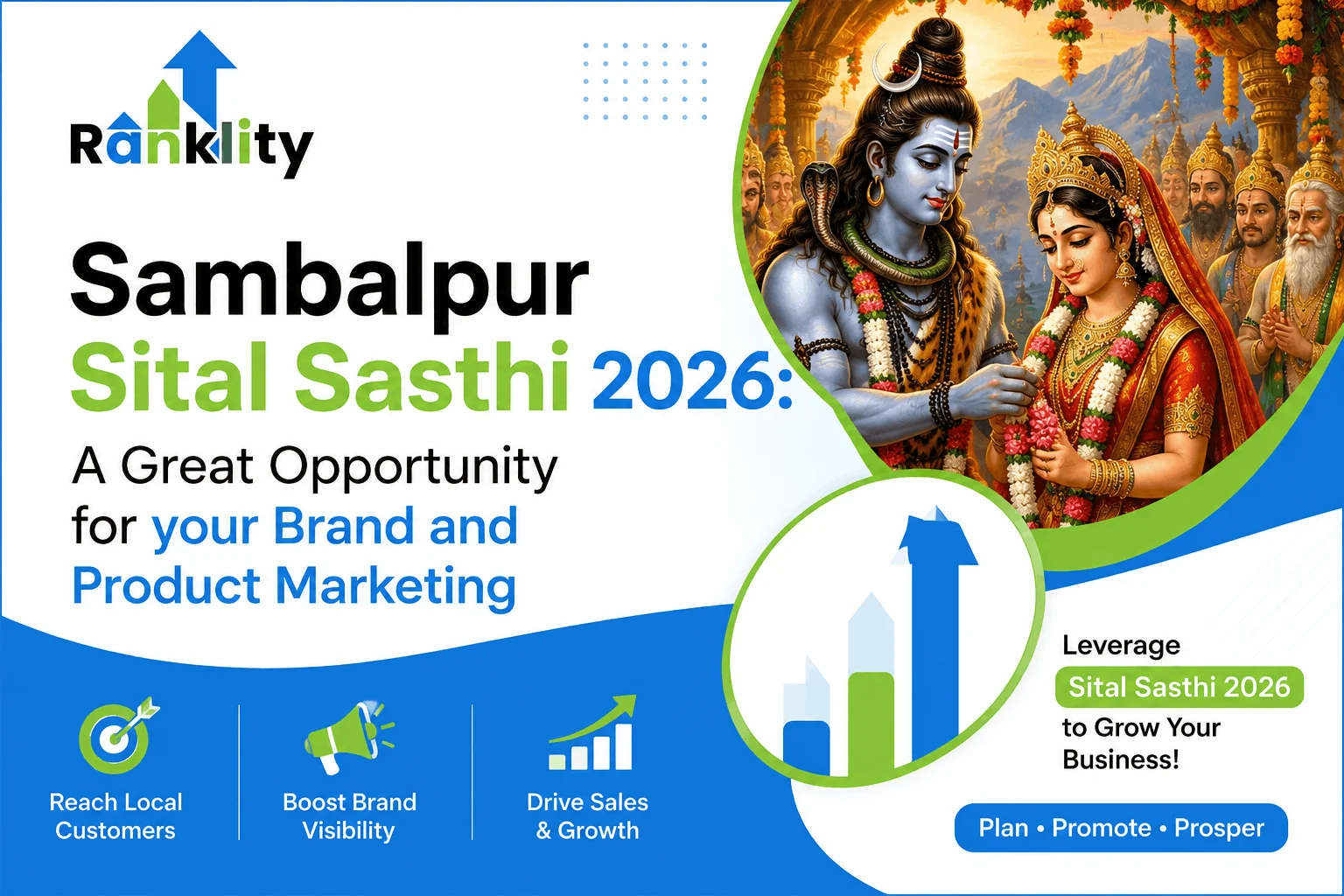
Every June, something extraordinary happens in Sambalpur.
Sambalpur Sital Sasthi is Hundreds of thousands of people pour into this mid-sized city in Western Odisha. It is 400 years old and still growing. Rural families arrive from Bargarh, Jharsuguda, Bolangir, and Sundargarh. Urban youth flood the streets after dark. Devoted pilgrims walk alongside elaborately decorated floats that carry the idol of Lord Shiva through the city’s lanes.
This is Sital Sasthi. And for marketers, it is one of the most underutilized consumer windows in Eastern India.
The 2026 edition runs June 15 to 21. The peak, the night procession known as the Barat on June 18 and the Wedding Yatra on June 19, is where the real opportunity lies. Two days. A captive audience of lakhs. Summer heat creates genuine physical needs. And almost no brand in the country is treating it with the strategic attention it deserves.
This article explains why that gap exists and how to close it.
Why Sital Sasthi Is Different from Every Other Festival Activation
Most Indian festivals are noisy, crowded, and hard to navigate without getting lost in the chaos. Brands set up stalls, hang banners, and hope someone notices.
Sital Sasthi is structurally different, and the difference matters.
The central event is a slow-moving procession. The Barat, the grand night march where Lord Shiva’s idol is carried through the city, accompanied by Jhankis (decorated floats), lasts the entire night. The procession route winds through Sambalpur’s lanes for over 6 to 8 hours. It does not move fast. By design, it cannot.
For a marketer, that slowness is the point.
Attendees stand along the route for hours. They are not walking past a billboard at 60 km/h. They are stationary, sweating in the summer heat, watching floats go by, talking with family, looking for anything that offers a moment of relief or engagement. A brand that understands this has something most urban-market activations never offer: sustained, voluntary attention from a captive audience.
The question is not whether to show up. It is how.
Sambalpur Sital Sasthi 2026: June 18-19
The entire seven-day festival has value. But the 48-hour window of June 18 and 19 is where the density of people, emotion, and purchase intent peaks simultaneously.
June 18 Night: The Barat Procession
This is the main event. The city effectively becomes an open-air theatre. Every major road along the procession route fills with spectators. Pada committees, which are neighborhood associations that each sponsor and present their own Jhanki, bring their floats out in sequence. The visual spectacle is significant enough that people travel from outside Sambalpur specifically to witness it.
Footfall along the procession route during the Barat night is the highest concentration of consumers you will encounter in this geography all year.
June 19: The Wedding Yatra
The following day marks the culmination of the divine marriage of Shiva and Parvati. Devotion is at its peak. Families visit temples, complete their religious obligations, and then spend the day in a celebratory mood. Consumer spending spikes. This is when the emotional energy of the night before converts into purchasing behavior.
Jewelry. Apparel. Sweets. Household items. These are not random purchases. They are deliberate and planned. Rural families often use this trip to the city to make purchases they have been putting off for months.
That pattern is a marketing gift, if you know how to work with it.
Who Is Actually in That Crowd
Sital Sasthi draws three distinct audience segments. Each responds to completely different marketing approaches, and confusing them is the fastest way to waste your festival budget.
Urban Youth: The Content Creators
These are 18-to-32-year-olds from Sambalpur and nearby towns. They are there for the festival but also for the experience. They photograph the Jhankis. They post stories. They look for spots that are visually interesting enough to be worth sharing.
They want Instagrammable moments, phone charging stations, and anything that feels worth documenting. They are not your highest-value purchase segment at the festival, but they are your amplification engine. If your brand gives them a reason to photograph it, that content travels well beyond Sambalpur.

Rural Families: The High-Intent Buyers
This is the segment that makes Sital Sasthi commercially serious. Families from villages and small towns across Western Odisha visit Sambalpur during the festival. For many, it is one of the few annual occasions when they are in the city with cash, in a celebratory mood, and actively thinking about purchases they have been planning.
Two-wheeler dealers in Sambalpur see a measurable spike in inquiries during festival week. The same happens with consumer electronics, gold jewelry, and household goods. These are not impulse purchases. They are decisions that have been forming for months, waiting for the right moment and the right occasion.
Sital Sasthi is that occasion.
Devotees: The Trust Economy
Long-term residents and pilgrims for whom the festival carries deep spiritual meaning are a third, distinct segment. They follow the procession with devotion, not as spectators. They are not looking for selfie frames or charging hubs.
What they respond to is Seva. Service. A brand that provides free drinking water, offers seating for elderly attendees, or quietly keeps the area near a rest stop clean will earn more goodwill from this group than any advertisement. And their goodwill translates to word-of-mouth that outlasts the festival by months.
The One Rule That Separates Effective Activations from Wasted Spend
During the Barat night, Out-of-Home advertising dramatically outperforms digital.
This surprises some marketers who assume that because their target demographic is on smartphones, digital spend is always the right lever. At Sital Sasthi on June 18, that assumption fails.
Rural visitors are not scrolling through Instagram while the procession passes. Urban youth are taking photos and watching the Jhankis. Devotees are in prayer. The attention of the crowd is directed outward, into the physical world, not at screens. A Facebook ad served to someone standing on the procession route at 11 PM is, practically speaking, invisible.
What is not invisible: a branded cooling zone with misting fans. A charging hub with your logo where twenty people are standing, waiting, and looking at your name for 20 minutes. A free water distribution stall with your brand on the cup.
Physical presence beats digital reach on June 18. This is not a philosophical preference. It is a practical reality of where crowd attention actually goes during a night procession in 44-degree summer heat.
Where to Place Your Brand (And Where Not To) in Sambalpur Sital Sasthi 2026
Most brands default to booking roadside hoardings. That is not a bad call, but it is the floor, not the ceiling.
The smarter move is to think in terms of Padas.
Padas are the neighborhood committees that organize each Jhanki. Nandapada, Jhaduapada, Khetrajpur, and others each prepare, fund, and present their own float. Local residents gather near their Pada’s float with particular pride and attention. These zones draw denser, more emotionally engaged crowds than a random stretch of the procession route.
Negotiating directly with a Pada committee for branded support of their Jhanki’s lighting, sound system, or attendant uniforms gives a brand association with something the community genuinely cares about. It is more visible and more culturally legitimate than a hoarding.
This requires 4 to 6 weeks of lead time. Pada committees need time to consider proposals and incorporate them into their plans. Showing up 10 days before the festival and expecting a deal is a mistake.
Where not to place advertising:
Do not put brand materials near temple entrances. Do not put large logos on the Jhankis themselves. Do not use images of Lord Shiva or Goddess Parvati in commercial messaging without deep community consultation. These are not just PR risks. They reflect a genuine misunderstanding of what the festival is and why people come. The community notices. The backlash is real.
The Service-First Activations That Actually Work
Given the context, the most effective brand activations at Sital Sasthi are not advertisements. They are services that people genuinely need.
Cooling Zones with Misting Fans
June 18 in Sambalpur is hot. The procession starts late and runs through the night, but temperatures do not drop dramatically. A branded tent with industrial misting fans on the procession route will draw a crowd on its own merit, without any promotion. People will stop, cool down, spend 10 to 15 minutes in the space, and notice your brand the entire time they are there. The tent becomes a talking point. People photograph themselves in front of it.
Mobile Charging Hubs
Phone batteries are dead by 10 PM on procession night. A branded charging station with 15 to 20 ports near a high-footfall Pada zone will have a queue by 9:30. People waiting for their phones to charge are in a genuinely captive state. Display a simple offer, a QR code, or a product demonstration during that 20-minute window.
Free Water Distribution
A simple setup. Two or three representatives in branded t-shirts, distributing cold water in branded cups or small bottles. Low cost, high visibility, and the goodwill generated is real. Devotees and rural family visitors will remember it. In communities where word-of-mouth is the primary trust mechanism, that memory converts.
Industry-Specific Ideas
FMCG
Mass sampling works at Sital Sasthi, but placement matters. The middle third of the procession route, where dwell time is highest, outperforms the start and end points where crowds are thinner. Sample products relevant to heat and the occasion: cool drinks, energy snacks, oral care. Attach a numbered coupon to every sample and set a 30-day redemption window at nearby retail points.
Automobiles
Two-wheeler and entry-level car dealers should position display vehicles near the procession assembly points, where rural visitors congregate before the Barat begins. Offer a ‘Sital Sasthi Booking Benefit,’ a modest deposit discount or a free accessory with confirmed purchase, to give visitors a reason to act during the festival rather than waiting. Sales executives should speak Odia or Sambalpuri. Language is trust here.
Jewelry and Apparel
Sital Sasthi is a divine wedding celebration. No festival in Western Odisha is more naturally aligned with bridal purchase decisions. Run a ‘Divine Bridal’ campaign across print and local radio in the week before the festival. Offer a ‘Book Here, Deliver Later’ option for rural buyers who do not want to carry large purchases back to their villages.
Telecom and Electronics
The charging hub is your natural activation. The product category connection is immediate and credible. Use the charging wait time to demonstrate a budget smartphone or a new data plan. Run a ‘Best Sital Sasthi Photo’ contest with prizes announced post-festival. This extends the campaign lifecycle beyond the two-day peak and gives you a follow-up reason to re-engage leads.
How to Measure What Actually Happened
Festival marketing without measurement is just spending. The following framework connects activations to outcomes.
During the festival:
Track units sampled, coupons distributed by zone, charging hub users, and cooling zone headcount. Use a simple numbered coupon system where the series code identifies which activation zone it came from.
After the festival (30-day window):
Track coupon redemptions at retail. Log all booking leads with a ‘Sital Sasthi source’ tag in your sales CRM. Count QR code scans and WhatsApp inquiries from a dedicated festival number.
The ratio that matters most:
Coupons distributed versus coupons redeemed. A redemption rate above 10% for a mass-distributed festival coupon is strong. Below 3% means the offer missed the audience or the placement was wrong.
This number, tracked year over year, turns festival marketing from a gut-feel exercise into a compounding asset.
A Note on Getting the Culture Right
Sital Sasthi is 400 years old. It is not a backdrop for marketing. It is a living tradition that the Sambalpuri community holds with genuine devotion.
Brands that understand this will frame their presence around contribution, not extraction. They will hire locally, brief their teams on Sambalpuri culture, use the correct name for the festival, and ask for permission before placing anything near devotional spaces.
Brands that do not understand this will find that the community notices, and that the noise travels faster in a tight-knit regional market than it does in a metro.
The good news is that cultural respect and marketing effectiveness are not in tension here. The most effective activations at Sital Sasthi, the cooling zones, the free water, the Pada sponsorships, are all things the community is glad to have. Getting the culture right and getting the marketing right are the same project.
The Practical Checklist Before June 18
Six weeks out: Finalize concept and budget. Identify which Padas to approach.
Five weeks out: Visit Sambalpur. Walk the route. Meet Pada committee heads.
Four weeks out: Confirm all placements and sponsorships in writing.
Three weeks out: Print coupons with zone codes. Order misting fans, charging hardware, and water supplies.
Two weeks out: Brief and train local ground team.
One week out: Set up infrastructure. Run a dry walk-through.
June 18 night: Full deployment. This is the window.
June 19: Shift to transactional push. Wedding Yatra energy favors retail conversion.
Thirty days after: Coupon window closes. Count everything. Debrief properly.
Conclusion
Sital Sasthi 2026 is the biggest consumer congregation in Western Odisha, and it happens in June, every year, on a predictable schedule. The audience is real, the intent is high, and the emotional context is as favorable as it gets.
Most brands are not there in any meaningful way. The ones that do show up often do so with generic hoardings and no strategy for the crowd they are actually facing.
The brands that will do well on June 18 and 19 are the ones that plan early, choose service over signage, and measure what happens in the thirty days that follow.
Sital Sasthi is not a footnote in the Odisha marketing calendar. For any brand that wants to build real presence in Western Odisha, it should be the centrepiece.
FAQ Section
What is Sital Sasthi and when does it take place in 2026?
Sital Sasthi is a 400-year-old carnival in Sambalpur, Odisha, celebrating the divine marriage of Lord Shiva and Goddess Parvati. In 2026, it runs from June 15 to 21, with the peak events being the Barat Procession on the night of June 18 and the Wedding Yatra on June 19.
Why is Sital Sasthi relevant for marketing and brand activations?
The festival draws hundreds of thousands of consumers to Sambalpur, including high-intent rural buyers and urban youth. The slow-moving night procession creates sustained dwell time that most advertising formats cannot replicate, making it an unusually effective window for brand visibility and consumer engagement.
Which industries benefit the most from marketing at Sital Sasthi?
Automobiles, jewelry, apparel, FMCG, consumer electronics, and financial services all see strong audience alignment. Rural families with saved purchase intent for big-ticket items like two-wheelers and gold jewelry make this an especially strong opportunity for those categories.
Need a Partner who does marketing for you?
We got you covered! Ranklity helps you with all your brand marketing, all services, and products through its Social Media Management, SEO, and Meta ads Management Strategy. We serve the businesses who situated/operated in(from) Sambalpur and its nearby areas like Burla, Budharaja, Ainthapali, Dhankauda, Khetarajpur Etc. Click the button to connect with us today.