
The internet has always been a strange place. But lately, it’s become truly unhinged in the most fascinating way. One week, you’re watching people glue cheese to walls. The next week, a cockroach is leading a political revolution with 19 million followers and a published policy manifesto. Welcome to internet culture in 2026.
That’s roughly what happened in India in May 2026, when something called the Cockroach Janata Party — or CJP — exploded across Instagram, X, meme pages, and reels in a matter of days. And somewhere in the middle of all this beautiful chaos, brands were watching. Very closely.
What is the Cockroach Janata Party?
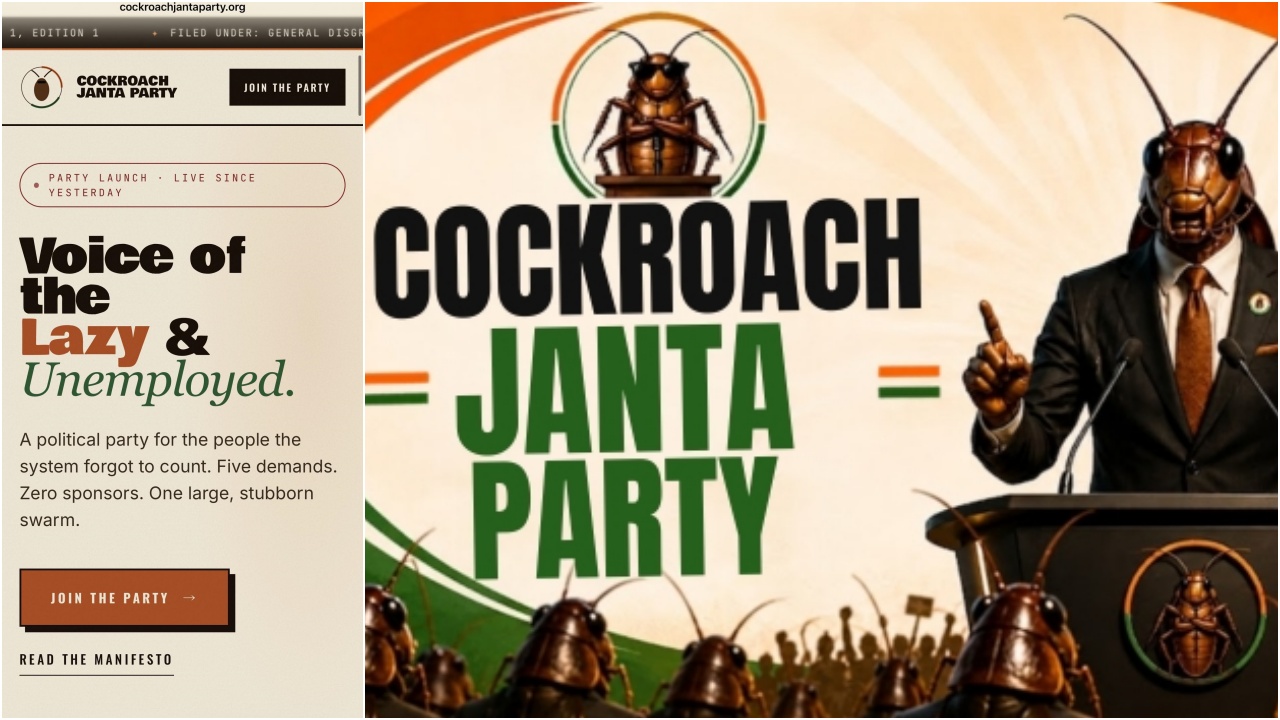
The Cockroach Janata Party is not a real political party. Let’s get that out of the way first. It’s a satirical online movement — born on May 16, 2026, and founded by Abhijeet Dipke, a political communications strategist and student at Boston University.
The name itself is a sharp, funny riff on the BJP — India’s ruling Bharatiya Janata Party. And the movement describes itself as “secular, socialist, democratic, and lazy.” Its self-declared purpose: to be the “Voice of the Lazy and Unemployed.” Within 48 hours of launching, the CJP had reportedly collected over 40,000 sign-ups. Within a week, its Instagram page had blown past 19 million followers — almost double the Indian government’s own follower count.
Yes, a satirical cockroach party had more social media clout than the actual government. The internet was delighted.
19M+Instagram followers in under a week
40K+Sign-ups within 48 hours of launch
May 16, 2026 — date of launch
Why did it go viral?
Every viral moment has a spark. For the CJP, it started with a remark attributed to Supreme Court Justice Surya Kant, who reportedly compared some unemployed young people and critics to “cockroaches” and “parasites.” The quote spread fast, and the internet did what it always does with something like this — it turned the insult into a joke, and then into an identity.
Gen Z didn’t get angry in the traditional sense. They didn’t write long op-eds or organize formal protests first. They made memes. They made reels. They called themselves cockroaches and started applying for “membership” in the CJP. The whole thing was absurd, hilarious, and somehow also very real.
“We have to understand that five years ago, nobody was ready to speak up against Modi or the government. The times are changing.” — Abhijeet Dipke, CJP founder
There was genuine frustration underneath all the humor. Youth unemployment, political accountability, examination scams — these weren’t just punchlines. They were actual concerns that had been building up for a while. The CJP just gave them a funny, shareable package. And that’s exactly the kind of thing that spreads at insane speed on Indian social media.
Instagram’s algorithm did the rest. When engagement spikes on a single type of content, the platform amplifies it — pushing it to more feeds, more suggested pages, more reels. Meme pages that posted CJP jokes saw massive reach. And each wave of posts created another wave of reactions. Before long, even comparing CJP’s follower count to the BJP’s official page became its own viral meme.
Why brands quickly jumped in
Here’s the thing about a viral trend: it’s essentially free attention. Millions of people are already tuned in, already emotionally engaged, already hitting share. For a brand, riding that wave — even for a moment — can mean reaching audiences they’d otherwise spend months trying to reach.
Digital-first brands and startups in India have become very good at this. They have small, agile social media teams. They don’t need three rounds of approvals for a tweet. When something breaks on the internet, they can publish a reaction post in under two hours. That speed is their advantage.
Food delivery apps, D2C brands, fintech startups, and meme-native pages were among the first to respond to the CJP moment. The playbook was fairly consistent: take the cockroach imagery or the “lazy and unemployed” identity, remix it with your product, keep it funny, keep it short, and post before the trend peaks.
How brands actually used the trend
The most common approach was reactive content — a quick post, a reel, or a story that acknowledged the trend without going overboard. Think a food delivery app posting something like: “Official food partner of the Cockroach Janata Party. Because even cockroaches deserve good biryani.” Silly, harmless, and timed perfectly.
Meme pages — which in India have enormous reach and work almost as unofficial brand channels — built entire content threads around CJP. They’d frame everyday relatable situations (unemployment, exam pressure, being broke in your 20s) through the CJP lens, tagging brands that were already part of those conversations.
D2C brands selling products to young Indians — clothing, food, finance apps, education platforms — leaned into the “lazy and unemployed” identity humor. Not to mock their users, but to say: “Hey, we see you. We get the joke. We’re one of you.” That kind of brand relatability is genuinely hard to manufacture, but when a trend hands it to you on a plate, you take it.
The brands that did it well weren’t trying to sell anything directly. They were just trying to be funny at the right time. The sales came later, when users remembered who made them laugh.
One fascinating marketing angle: CJP created a search vacuum. When millions of people suddenly Google “Cockroach Janata Party,” there’s very little quality content available to answer their questions. Brands and content creators that published explainer articles, opinion pieces, or behind-the-scenes takes on the trend within the first 48–72 hours captured enormous organic search traffic. That’s reactive marketing meeting basic SEO — and it worked.
Why meme marketing works so well today
Memes are the internet’s native language. They travel faster than ads. They don’t feel like ads. And they carry cultural meaning that a banner or a TV spot simply can’t replicate.
When a brand makes a good meme — one that actually fits the cultural moment — people share it not because they’re promoting the brand, but because the meme is funny on its own. The brand just happens to be attached. That’s the difference between advertising and participation.
Risks of trend-based marketing
- Cringe marketing: If the post feels forced or tone-deaf, it backfires instantly. Gen Z will screenshot it and make it into a different meme — about how bad your marketing is.
- Timing failure: Miss the 24–48 hour window and you’re posting about a trend that’s already dead. There’s nothing worse than late-to-the-party content.
- Political adjacency: The CJP was deeply political. Brands that got too close to the political commentary angle risked alienating half their audience or attracting unwanted attention.
- Inauthenticity: As one observer put it: “Audiences can detect artificiality instantly.” If you’re trying to manufacture rebellion or fake relatability, people will see right through it.
Gen Z is the most media-literate generation that has ever existed. They grew up on the internet. They know what an ad looks like. They know when a brand is trying too hard. The brands that survive meme culture are the ones that bring something genuine to the table — a real sense of humor, a clear personality, a point of view that goes beyond “please buy our product.”
Why Gen Z engages so heavily with satire
There’s a reason political satire has become Gen Z’s preferred mode of protest. Traditional political engagement — rallies, formal party membership, op-eds — feels inaccessible or slow. A meme takes thirty seconds to make and can reach a million people before dinner.
But it’s not just about reach. Satire lets you say something serious while also making people laugh. The CJP was genuinely funny — the cockroach costume clean-up drives along the Yamuna River were performance art and civic activism at the same time. The humor wasn’t hiding the message. It was amplifying it.
For Gen Z, this kind of expression is also about identity. When you share a CJP meme, you’re not just laughing. You’re signaling: “I’m frustrated with the system. I’m in on the joke. I belong to this community.” Brands that understand this — that their young customers aren’t just buying products, they’re buying into identities — are the ones doing the smartest marketing right now.
What businesses can learn from this viral moment
- Speed is your biggest asset. The best reactive content is published within hours, not days. If your brand needs five approval layers for a meme, you will always miss the window.
- Understand your audience’s emotional temperature. The CJP worked because it tapped into real frustration. The brands that responded well understood what their young audience was actually feeling — not just what they were laughing at.
- Participate, don’t perform. The best brand responses felt like they were in on the joke. The worst ones looked like brands desperately trying to be cool. There’s a difference, and audiences can always tell.
- Spot the SEO opportunity. Viral trends create search spikes. If your brand or blog can publish quality content around a trending topic fast, you can capture organic traffic that has nothing to do with social media.
- Know when to stay out of it. Not every trend is for every brand. A fintech app and a D2C snack brand have very different risk appetites for political adjacency. Know yours before you post.
- Identity beats product. CJP grew to 19M followers without selling a single thing. Because it had a clear identity that people wanted to be part of. That’s the lesson every brand needs to write on a wall somewhere.
Conclusion
The Cockroach Janata Party was one of those rare internet moments where everything aligned perfectly — a relatable insult, a funny response, a real underlying frustration, and a platform algorithm that poured gasoline on the fire. The result was one of the fastest-growing social media movements India has ever seen.
Brands that showed up with good timing and genuine humor earned attention they couldn’t have bought with any ad budget. Brands that tried too hard became the joke. And brands that ignored it entirely missed a case study worth studying for years.
The internet will always produce the next weird, wild, unhinged viral moment. The question for every marketer isn’t “will this happen again?” It absolutely will. The question is: when it does, will you be ready?
Because somewhere out there, the next cockroach is already sharpening its antennae.